

01
Cost of goods sold
Track ingredient costs and consumption to understand variations and protect operating margins.
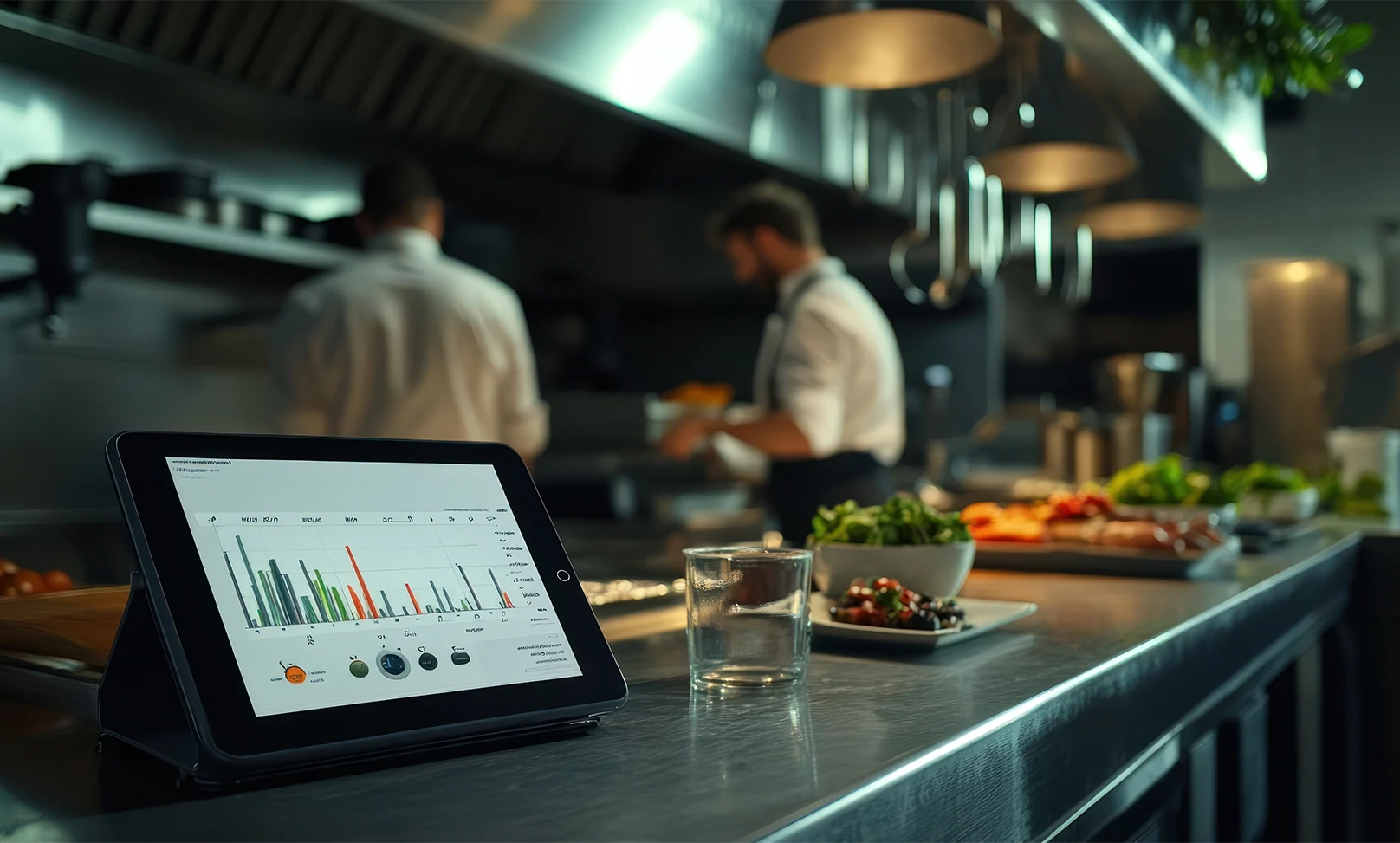
Connect purchasing, inventory, production, sales and finance to track costs, reduce losses and grow efficiently.
Discuss your industry

Connect day-to-day decisions to the processes that underpin results.
Track ingredient costs and consumption to understand variations and protect operating margins.
Organize receipts, issues, batches and losses to improve availability and traceability.
Connect each location’s needs with suppliers, lead times and approval rules.
Connect ingredients, preparation and consumption through industry capabilities suited to your operations.
Bring billing, payments, receipts and obligations together to track results consistently.
Prepare management for new locations, distribution centers and channels while maintaining business visibility.
The ERP organizes the back office: purchasing, receiving, inventory, payments and results. Point of sale, table orders, apps and kitchen systems must be connected and tested against the tools actually used.
SAP Business One and SAP S/4HANA Cloud are assessed against your processes, integrations and governance requirements. Recipe management, food production and front-of-house features are not assumed; they must appear in the demonstrated scope.
Compare SAP paths ↗Check purchasing and consumption units, yields, waste, batches and fiscal rules with local owners.
Define sales reconciliation and delayed-integration handling to avoid duplicate revenue.
Test a transfer, expiry, cancellation and settlement with a fee discrepancy.
Technical and business insight, close collaboration and clarity at every stage.
Processes, needs and opportunities.
Solution, modules and integrations.
Scope, configuration and testing.
A team ready to operate.
A closely supported transition.
Improvements for the challenges ahead.
We map POS systems, platforms and payment methods to compare sales, fees and settlements. Integration and reconciliation solutions are scoped with tests for cancellations, refunds and discrepancies.
The assessment distinguishes ERP capabilities, configuration and complementary solutions. The proposal records integrations, responsibilities and acceptance criteria for each included process.
Yes. The assessment considers your current version, processes, data and integrations to prioritize improvements. The plan may include adjustments, training, new integrations or a migration journey, depending on the findings.